

Therapy for Men Who Everyone Depends On In Orlando
You Look Like You’re Handling It. But It’s Getting Heavy.
Many men are good at performing under pressure.
You show up. You work hard. You provide. You keep moving. You handle what needs to be handled.
From the outside, everything may look fine.
But internally, you may feel exhausted, disconnected, irritable, restless, numb, angry, or unsure how much longer you can keep carrying everything.
Therapy can help you slow down, sort through what is actually happening, and find a better way to live without losing the strength, responsibility, or discipline that have helped you get this far.
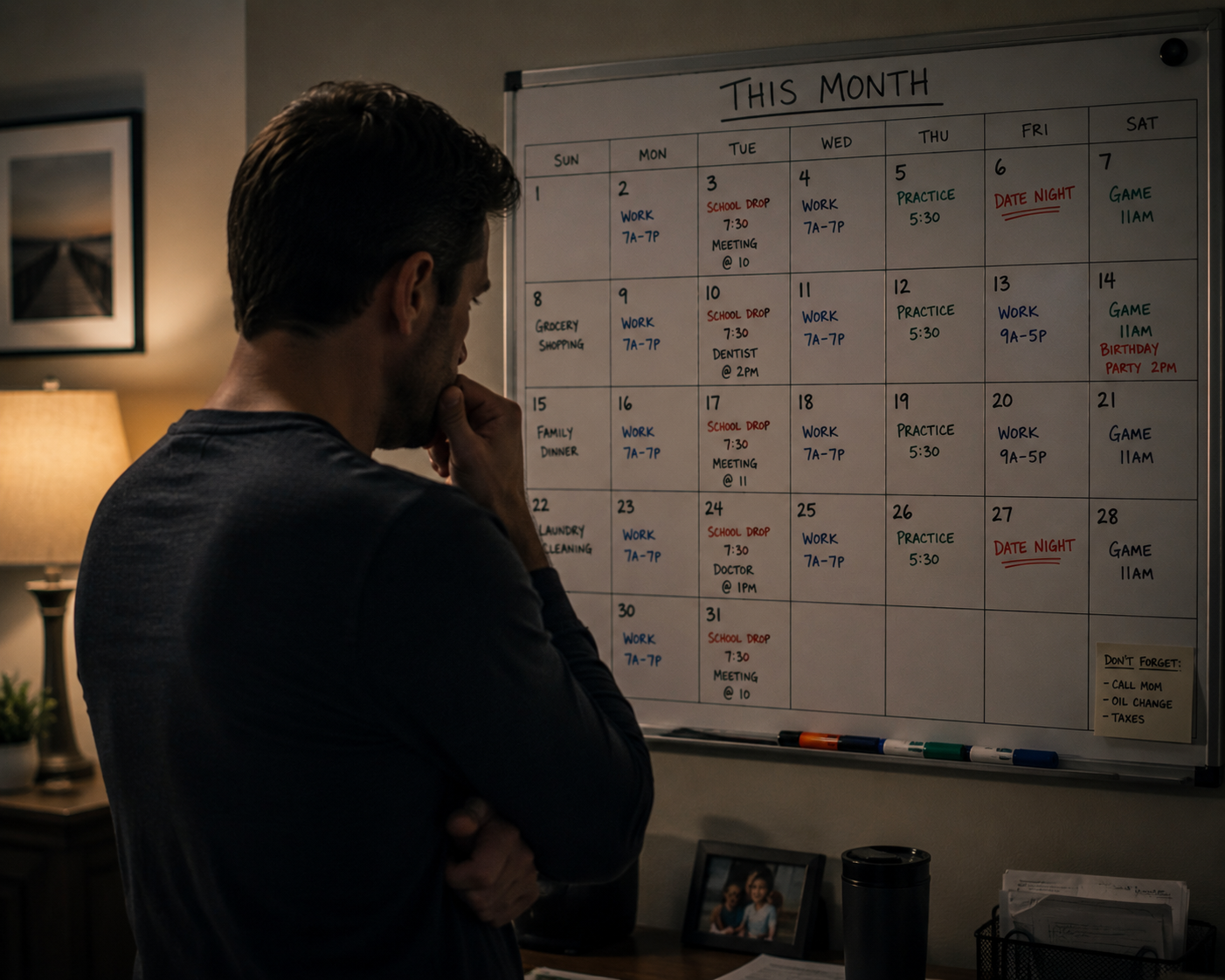

When “I’m Fine” Stops Working
You may be dealing with:
Constant pressure to provide or perform
Irritability, anger, or emotional shutdown
Feeling distant from your partner, family, or friends
Trouble relaxing even when nothing is wrong
Burnout from always being responsible
Anxiety that shows up as control, overthinking, or restlessness
Feeling like no one really knows what you are carrying
Drinking, scrolling, working, or staying busy to avoid slowing down
A sense that something is missing, even if life looks successful
You may not think of yourself as “depressed” or “anxious.”
You may just know that you are tired of living this way.
Therapy That Respects Strength
Therapy is not about making you weak, emotional, or dependent.
It is about helping you understand what is no longer working.
For many men, therapy is a place to talk honestly without having to perform, protect everyone else, or pretend things are fine.
We can work on the parts of life that often get pushed aside:
Stress
Anger
Burnout
Relationships
Work pressure
Identity
Fatherhood
Loneliness
Purpose
Emotional shutdown
Major life transitions


Who This Page Is For
This page may be for you if you are:
A first responder
A healthcare worker
A business owner
A manager or supervisor
A tradesman
A veteran
A father
A husband or partner
A high-responsibility professional
Someone everyone else depends on
You do not have to be in crisis to start therapy.
Sometimes therapy is most useful before everything falls apart.
The Cost of Always Being the Strong One
Being dependable can become part of your identity.
People come to you for answers. They expect you to stay calm. They count on you to fix things, make decisions, and keep going.
That strength can be valuable.
But over time, always being the strong one can lead to resentment, isolation, pressure, and emotional exhaustion.
You may find yourself thinking:
“I can’t talk to anyone about this.”
“Other people have it worse.”
“I should be able to handle this.”
“I don’t even know what I feel anymore.”
“I don’t want to burden anyone.”
“I just need to push through.”
Therapy gives you a place where you do not have to carry everything alone.

How Therapy Can Help
In therapy, we may work on:
Managing stress and burnout
Understanding anger and irritability
Improving communication in relationships
Reconnecting with purpose and identity
Learning how to slow down without feeling useless
Setting boundaries without guilt
Processing grief, regret, shame, or disappointment
Building healthier ways to handle pressure
Making decisions that align with your values
The goal is not to turn you into someone else.
The goal is to help you become more honest, grounded, and connected in the life you already have.
Why Work With Me?
Before becoming a therapist, I spent more than 30 years in emergency services as a firefighter paramedic. I understand cultures where people are expected to stay composed, carry pressure, and keep functioning no matter what.
My counseling approach integrates Acceptance and Commitment Therapy, Gestalt therapy, DBT-informed skills, and a practical understanding of people who are used to being responsible for others.
You do not have to explain why it has been hard to ask for help.
We can start there.